
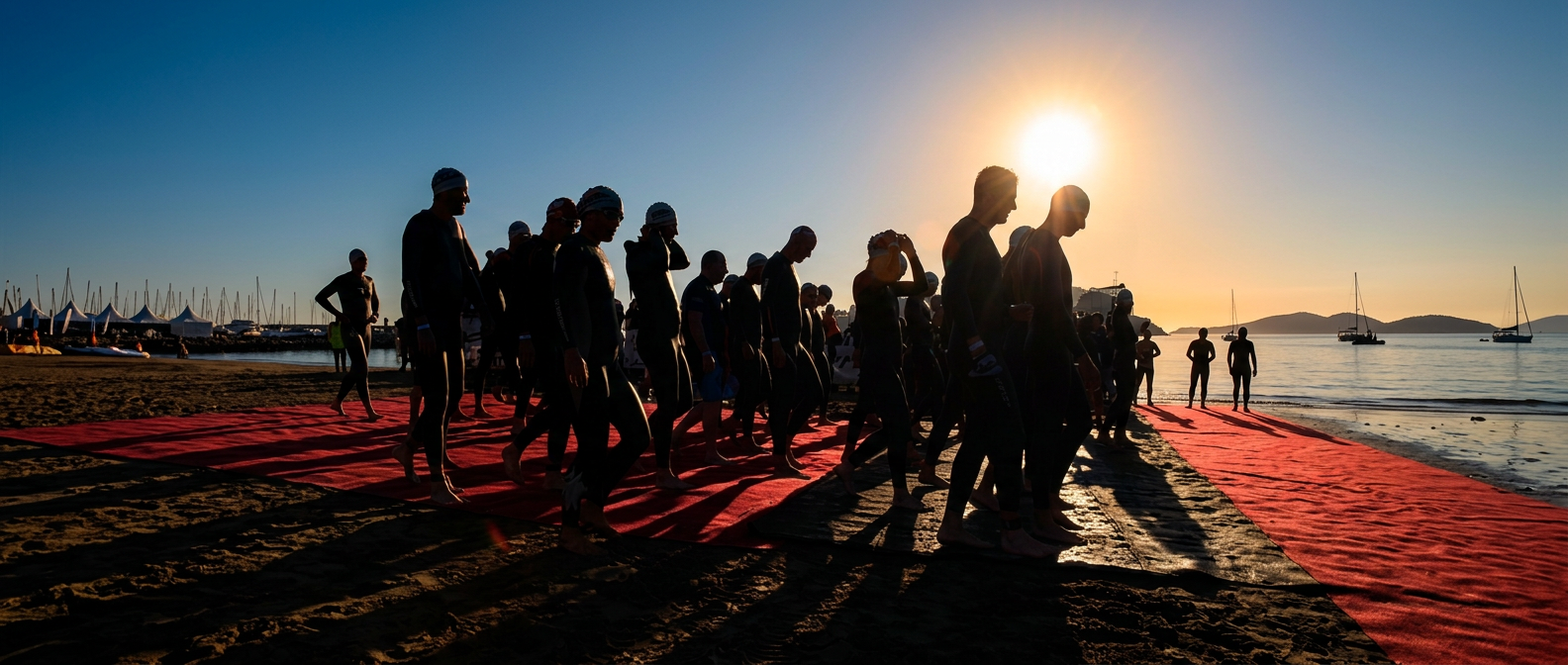
Managing a late-season Ironman 70.3 presents a unique double challenge: late-season mental fatigue and extreme temperature swings on race day. Moving from a crisp morning sea start to a scorching afternoon run requires a strategy that differs significantly from early-season events.
Here is how to optimise your final build, master cold open water, and execute your hydration for late-season success.
The 14-Day Autumn Taper: Maintain Sharpness, Reduce Volume
Late-season tapers require less of a volume drop compared to spring races. Because you already carry months of aerobic baseline, dropping volume too drastically can leave you feeling sluggish rather than fresh.
- Volume Drop: Reduce overall training volume by 30-40% over the final two weeks, keeping intensity high in short bursts.
- Race-Pace Sharpness: Maintain brief race-pace efforts (e.g., 3 x 4 minutes at 70.3 target power on the bike; 4 x 2 minutes at target run pace) to retain neuromuscular sharpness without creating fatigue.
- Frequency over Duration: Keep your session frequency high so your body stays in a rhythm, but shorten the duration of each workout significantly.
Tackling the Temperature Gap
Cold Morning Swims Late-season sea starts often feature chilly water combined with low morning air temperatures while waiting in the starting corrals.
- Corral Core Heat: Keep a disposable thermals layers or throwaway jumper on until the last possible minute. Keep booties or warm socks on while waiting in line to prevent blood from shunting away from your extremities.
- Warm-up Protocol: Perform a dynamic land warm-up (arm circles, core activation, and leg swings) to raise your heart rate before touching the water. If allowed, get in for a 2-minute dip to flush cold water into your wetsuit so your body can warm it up before the gun goes off.
- Anti-Fog Fix: Spray goggles with anti-fog solution or dilute baby shampoo, rinse quickly in freshwater, and avoid resting them on your warm forehead before entry to prevent condensation.
Midday Heat on the Run Transitioning from a cool morning bike to a high-noon run catches many athletes off guard as temperatures peak.
- Pre-Hydration & Sodium Loading: Begin increasing your sodium intake 24-48 hours prior to race start. Aim for high-electrolyte solution drafts rather than plain water to keep plasma volume elevated.
- Bike Execution: Don’t let the cool morning bike fool you into under-hydrating. Consume your target hourly carbohydrate and fluid quotas even if you don’t feel thirsty yet.
- Run Cooling Protocols: Take ice at aid stations immediately—place it in your cap, down your tri suit, or hold it in your hands to keep core body temperature suppressed before thermal drift impacts your pace.
Mental Stamina at Season’s End
By autumn, “race fatigue” sets in. Motivation can wane after months of structured training, making hard efforts feel mentally harder than they did in May.
- Reframe the Mindset: Shift focus from raw fitness gains to execution mastery. Your fitness is already in the bank; the late-season race is purely a puzzle of pacing and nutrition.
- Micro-Goals: Break the race into small chunked segments—aid station to aid station on the run, or 10-minute blocks on the bike—rather than looking at the remaining distance as a whole.
Got a late-season race on the calendar? Book a single 1-on-1 Race Prep Strategy Session or join the Stealth Squad for your Taper plan to lock in your execution plan before you hit the start line.
 Stealth Endurance Coaching Squad